Structural steel is a fundamental component of modern commercial buildings and projects, but it has a critical vulnerability in a fire.
Although steel does not burn, it loses strength rapidly as temperatures rise. Without adequate protection, load-bearing elements can deform, compromising structural stability and increasing risks to occupants and property.
Intumescent coatings are among the most widely specified forms of passive fire protection for structural steel. They play a key role in helping buildings meet fire resistance requirements and maintain stability long enough to support evacuation and emergency response.
However, achieving the required level of fire protection depends on more than selecting the right product. Correct specification, surface preparation, application and inspection are all essential for performance and regulatory compliance.
This article explains how intumescent coatings work, the differences between available systems, why film thickness measurement is critical, and the importance of specialist application.
What is an intumescent coating and how does it work?
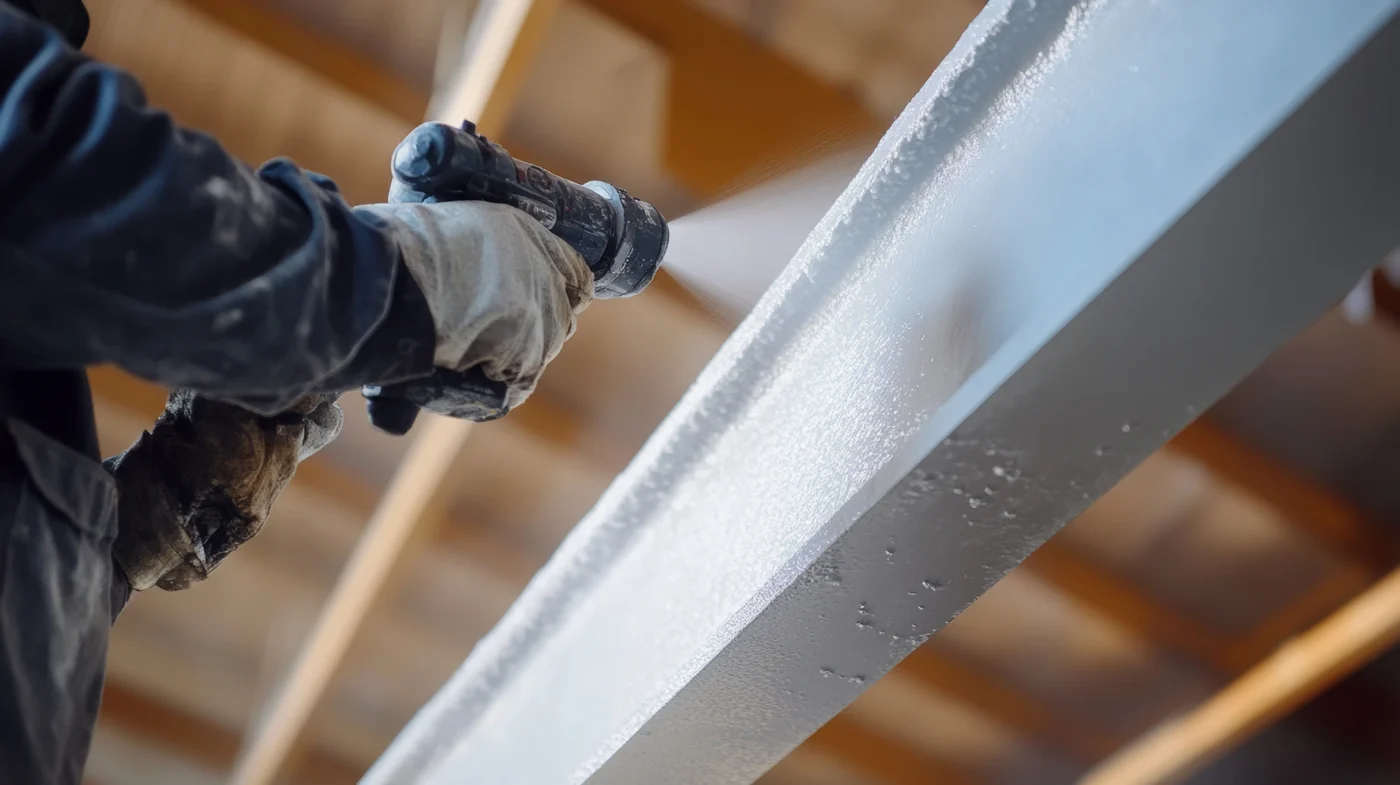
An intumescent coating is a specialist fire protection coating designed to insulate structural elements when exposed to high temperatures.
It is commonly used on structural steelwork in commercial, industrial and public buildings where fire resistance requirements form part of the overall building design.
Under normal conditions, the coating functions like a conventional paint system. During a fire, however, the coating undergoes a chemical reaction that causes it to expand significantly. This expansion creates an insulating carbon-rich layer known as an intumescent char.
The char acts as a protective barrier, slowing the transfer of heat from the fire to the substrate beneath. By delaying the rate at which structural steel reaches critical temperatures, the coating helps preserve load-bearing capacity for a specified period, typically 30, 60, 90 or 120 minutes depending on the design requirements.
Intumescent coatings are commonly specified for:
- Structural steel frames
- Columns and beams
- Floor and ceiling support systems
- Exposed steelwork in commercial buildings
- Industrial and infrastructure projects
The objective is straightforward: provide sufficient fire resistance to support safe evacuation, facilitate emergency response and help prevent premature structural failure.
Choosing between thin film and thick film intumescent coatings
Not all intumescent coating systems are the same. The appropriate specification depends on factors including the environment, substrate, fire resistance requirement and long-term exposure conditions.
Thin film intumescent coatings
Thin film systems are most commonly used for internal structural steelwork. They provide a smooth decorative finish while delivering the required fire protection performance.
These coatings are typically available as:
- Water-based systems
- Solvent-based systems
Water-based products are often selected for internal environments where low odour and reduced VOC emissions are priorities. Solvent-based alternatives may be preferred where application conditions are more challenging or where faster curing characteristics are required.
Thick film intumescent coatings
Thick film systems are generally specified for more demanding environments, particularly where steelwork is exposed to external conditions or aggressive industrial atmospheres.
These coatings are usually epoxy-based and offer enhanced durability alongside fire protection performance. They are commonly used in:
- External structural steelwork
- Petrochemical facilities
- Energy infrastructure
- Heavy industrial environments
The required fire resistance period plays a significant role in product selection. Higher fire ratings generally require greater coating thicknesses, making accurate specification essential from the outset.
A properly designed system considers not only the fire performance requirement but also environmental exposure, maintenance expectations and the overall lifecycle of the asset.
Why WFT and DFT measurements are essential for fire protection compliance
For an intumescent coating to perform as tested and certified, it must be applied at the correct thickness. This is where wet film thickness (WFT) and dry film thickness (DFT) measurements become critical.
What is wet film thickness (WFT)?
Wet film thickness refers to the thickness of the coating immediately after application, before any solvents or water have evaporated during the curing process.
Measuring WFT allows applicators to verify that sufficient material has been applied to achieve the required dry film thickness once the coating has cured.
By checking thickness during application, adjustments can be made before the coating dries, helping to avoid costly remedial work later in the project.
What is dry film thickness (DFT)?
Dry film thickness is the thickness of the coating after it has fully cured. This is the measurement used to determine whether the installed coating system meets the project specification and the fire resistance requirements set out in the product’s certification.
The fire resistance rating achieved during product testing is directly linked to a specified dry film thickness. If the required build is not achieved, the coating cannot be assumed to provide the intended level of fire protection.
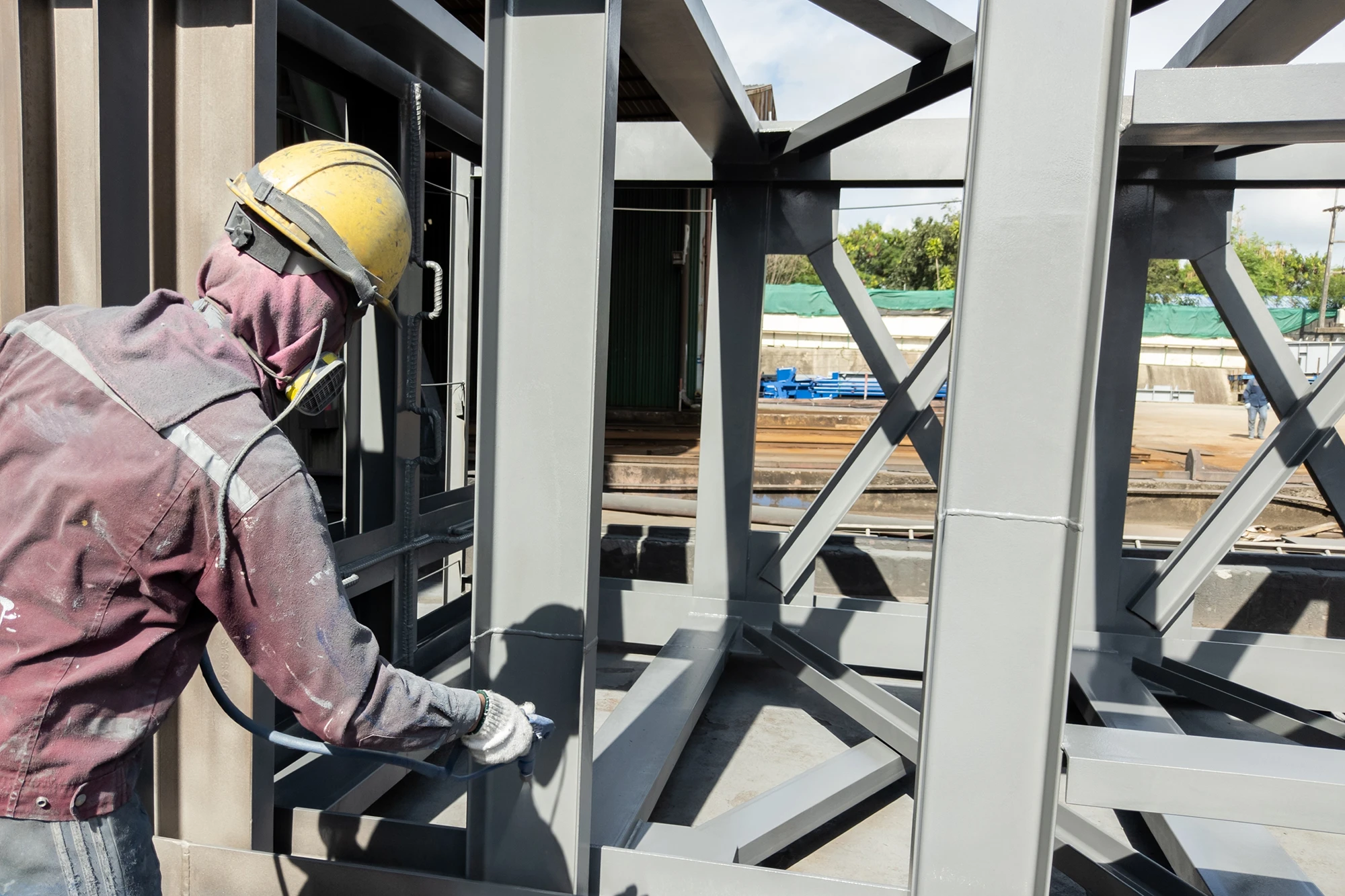
Although WFT and DFT measurements may appear to be routine quality checks, they are fundamental to compliance and performance.
Achieving the correct thickness requires:
- Detailed specification calculations
- Trained applicators
- Calibrated measuring equipment
- Ongoing inspection during application
- Comprehensive quality records
Documented WFT and DFT measurements provide evidence that the installed system matches the approved specification.
This evidence is often required as part of project handover documentation and may be reviewed during compliance inspections, audits or future building assessments.
In passive fire protection, thickness is a critical factor in how the system achieves its certified fire resistance performance.
The compliance risks of incorrect intumescent coating application
Even where the correct coating has been selected, failures during specification, application or quality assurance can compromise the performance of the system.
The following issues are among the most common causes of non-compliance and can affect both fire protection performance and the ability to demonstrate that the installed system meets project requirements:
Inadequate surface preparation
The long-term performance of an intumescent coating begins with the condition of the substrate. Contaminants such as rust, mill scale, dust, oil or moisture can affect adhesion and lead to premature coating failure.
Proper preparation ensures the coating system bonds correctly to the steelwork and performs as intended throughout its service life.
Incorrect primer compatibility
Not all primers are compatible with all intumescent coating systems. Manufacturers test and certify specific primer, intumescent and topcoat combinations to ensure reliable performance.
Using an unapproved primer can affect adhesion, curing characteristics and fire performance, potentially invalidating certification and warranty requirements.
Unsuitable application conditions
Environmental conditions can significantly influence coating performance during application and curing.
Factors such as temperature, humidity and ventilation must remain within the limits specified by the manufacturer. Applying coatings outside these parameters can lead to defects including poor curing, cracking, blistering or inconsistent film thickness.
Failure to achieve the specified thickness
Achieving the correct dry film thickness is one of the most important aspects of passive fire protection.
The required thickness is determined through fire testing and engineering calculations based on the steel section and required fire resistance period. Insufficient thickness may prevent the coating from providing the certified level of protection, while excessive thickness can also create application and performance issues.
Incomplete inspection and quality records
Even when a coating has been applied correctly, the absence of supporting documentation can create compliance challenges.
Inspection reports, film thickness measurements and quality control records provide evidence that the installed system matches the approved specification. Without this documentation, demonstrating compliance during project handover, audits or future building assessments can become significantly more difficult
Why contractor expertise matters in passive fire protection
Intumescent coatings should never be viewed as a standard painting project. Successful installation requires specialist knowledge of fire protection requirements, coating systems, substrate preparation and inspection procedures.
A competent passive fire protection contractor will typically manage the process from initial assessment through to final certification. This includes:
- Reviewing structural fire protection requirements
- Selecting appropriate coating systems
- Confirming compatibility with primers and topcoats
- Preparing substrates to the required standard
- Applying coatings in accordance with manufacturer specifications
- Recording WFT and DFT measurements throughout the project
- Providing compliance documentation on completion
This documented approach creates a clear evidence trail demonstrating that the installed system meets the specified performance requirements.
For architects, facilities managers, property owners and principal contractors, contractor selection is therefore a critical project decision.
Choosing a specialist provider reduces risk, supports regulatory compliance and helps ensure the fire protection strategy performs as intended throughout the life of the building.
As a specialist contractor focused on protective coatings and passive fire protection systems, DS Protective Coatings deliver intumescent coating projects with the technical expertise, quality controls and compliance documentation required for modern commercial buildings.
How Davison Solutions can help
DS Protective Coatings provide specialist intumescent coating services for commercial, industrial and public-sector projects across the UK.
With extensive experience delivering protective coating solutions in live operational environments, our team works closely with clients, contractors and project stakeholders to ensure fire protection systems are installed to the highest professional standards.
Our services cover the complete delivery process, from initial project assessment and coating specification through to surface preparation, application, quality control and final handover documentation.
Every project benefits from detailed planning, proven application methods and rigorous quality assurance procedures designed to support both performance and compliance requirements.
We apply intumescent coating systems to structural steel, timber, walls and ceilings using market-leading fire protection products capable of providing up to 120 minutes of fire resistance when specified and installed correctly.
Our team understands the importance of achieving the required film thickness, maintaining compatibility between coating systems and producing the documentation needed to demonstrate compliance.
As a nationwide contractor, we support projects across a wide range of sectors, including commercial property, industrial facilities, local authority buildings, education environments and healthcare settings.
Whether supporting a new-build development, refurbishment programme or maintenance project, we deliver safe, reliable and professionally managed installations with minimal disruption to day-to-day operations.
If you are planning a passive fire protection project and need expert guidance on intumescent coating specification or application, contact us today to discuss your requirements.