Choosing paint for a commercial environment is rarely just about colour. For business owners, facilities managers, and asset managers, the specification of the paint finish is what determines how well a space performs over time.
Get it right and walls, trims, and surfaces retain their appearance, withstand daily wear, and remain cost-effective to maintain. Get it wrong and even the most carefully chosen colour can quickly look tired, damaged, or unhygienic.
Our DS Painting & Decorating team understands that commercial paint finishes sit at the intersection of aesthetics, durability, and operational performance.
This guide is designed to go beyond surface-level advice, explaining the science behind different finishes, where they perform best, and how the right specification protects your building as a long-term asset.
Why ‘right first time’ specification matters
In commercial settings, repainting is rarely a simple inconvenience. It disrupts operations and has an ongoing impact on staff, customers, and visitors alike. One of the most common reasons commercial finishes fail prematurely is incorrect specification rather than shoddy application.
For example, a flat matt paint might look modern in a newly refurbished retail unit, but without sufficient durability it will require frequent touch-ups and quickly lose its visual lustre in high-traffic zones. On the other hand, a high-gloss finish might be robust, but can highlight surface imperfections and create unwanted glare under strong lighting.
A right-first-time approach considers:
- How the space is used day to day
- The level of traffic and contact with surfaces
- Cleaning regimes and hygiene requirements
- The underlying substrate
- Lighting conditions and energy efficiency
This is where professional commercial decorating specifications add real value. Rather than defaulting to a familiar product, Davison Solutions provides technical consultation to ensure the finish works as hard as the space itself.
From matt to gloss: Understanding the paint finish spectrum
Paint finishes are typically defined by their sheen level, which describes how much light they reflect. As sheen increases, so does durability and cleanability, but often at the expense of surface forgiveness. Understanding this spectrum lies at the core of making the right choice for your property.
Matt and flat finishes
Matt finishes have the lowest sheen level, absorbing light rather than reflecting it. This makes them excellent at hiding surface imperfections like uneven plastering or historic repairs.
These finishes are best suited for ceilings in most commercial environments, office walls, boardrooms and meeting spaces, and areas where glare needs to be kept to a minimum.
However, it’s important to remember that traditional matt paints are less resistant to scuffing and repeated cleaning. And while modern formulations have certainly improved, they are still best reserved for spaces with limited physical contact.
Eggshell finishes
Eggshell, as you might expect from the name, offers a subtle sheen that sits somewhere between matt and satin. It provides a more refined appearance than matt while still offering improved durability and washability.
This paint finish is ideal for offices and professional workplaces, welcoming reception areas, and low to moderate traffic corridors. Eggshell is often considered the ‘safe’ commercial option where a clean, contemporary look is required without the high reflectivity of glossier finishes.
Gloss and semi-gloss finishes
Gloss finishes sit at the very top end of the sheen scale, offering maximum durability and moisture resistance. Along with satinwood finishes they are most commonly specified for skirting boards, doorframes, handrails, wet areas, and kitchens.
While extremely robust, gloss finishes highlight surface defects and require meticulous preparation. This is where experienced commercial painters make a visible difference.
Satinwood provides a durable, smooth, low-sheen finish ideal for modern, subtle look.
A quick guide to specialist coatings
Beyond standard decorative finishes, many commercial environments require specialist coatings designed to deliver specific performance outcomes. Here, you’ll find a selection of these coatings and the kind of spaces they’re best suited to.
Scrubbable and high-performance acrylics
Modern scrubbable paint finishes use advanced acrylic technology to deliver durability without excessive sheen. These are ideal where frequent cleaning is required without compromising appearance. Typical applications for these coatings include offices with high occupancy, school corridors, and retail changing rooms.
DS recommended products
- Johnstone’s Trade Acrylic Durable Matt
- Johnstone’s Trade Cleanable Matt
- Dulux Trade Diamond Matt
- Dulux Trade Scuffshield Matt
Anti-bacterial and hygienic coatings
In healthcare and other care environments, hygiene is a must. Anti-microbial coatings are designed to inhibit the growth of bacteria and withstand even the most aggressive cleaning regimes. Typical applications, as you might expect, include hospitals and clinics, GP surgeries, and care homes.
These finishes form part of a wider hygienic coating system, often specified alongside chemical resistance and moisture control.
DS recommended products
- Johnstone’s Trade Microbarr Anti-Bacterial Acrylic Matt / Acrylic Eggshell
- Dulux Trade Sterishield Diamond Matt / Eggshell
Fire-retardant finishes
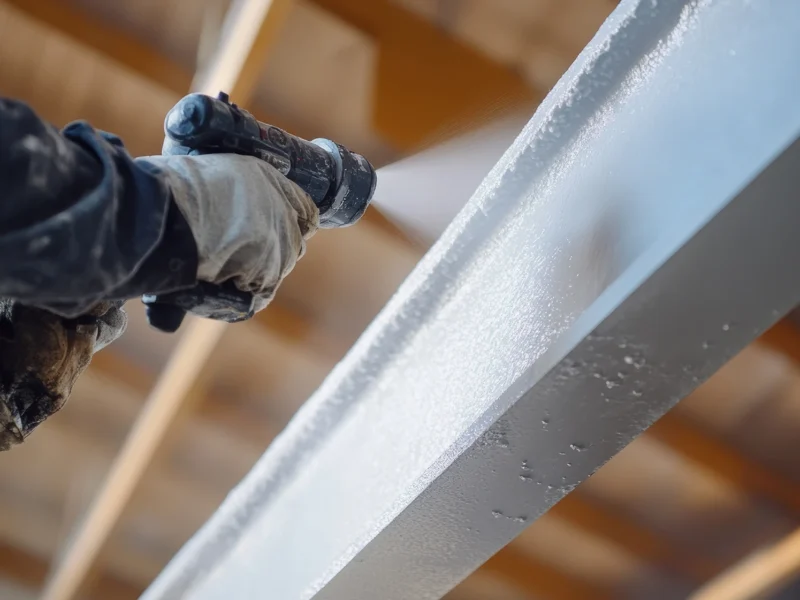
Fire-retardant and intumescent coatings play a key role in building safety and compliance. These specialist finishes are designed to slow the spread of fire or protect structural elements. Our expertise in protective coatings ensures correct specification in line with regulatory requirements, no matter your sector.
Substrate considerations: Matching finish to surface
Even the most durable paint will underperform if it is not compatible with the underlying substrate. Commercial buildings often contain a mix of surfaces, each with its own characteristics and preparation requirements.
Correctly matching the paint system to the substrate is absolutely essential to achieving a finish that lasts. Here are some of the most common substrates you’ll find in commercial properties and how they must be treated for maximum performance:
- Plaster and drywall: These are common in offices and public buildings and typically suit matt, eggshell or satin finishes depending on traffic levels. New plaster requires appropriate sealing to control suction, while older surfaces may need stabilisation to prevent flaking or uneven sheen.
- Timber: Wood expands and contracts with changes in temperature and humidity. Satin or gloss systems are often specified for timber elements because they offer flexibility and ease of cleaning. Correct priming and knotting are indispensable to prevent staining and premature failure.
- Metal: Metal surfaces demand specialist preparation and primers to prevent corrosion. Industrial paint finishes and protective coatings are commonly required in plant rooms, stairwells, and external areas where exposure is higher.
- Masonry and concrete: These substrates can hold and release moisture. Breathable or elastomeric coatings may be required to accommodate movement and prevent trapped moisture from causing blistering or peeling.
By assessing substrates early, our team can ensure that the chosen finish works with the building fabric rather than against it. This technical approach forms a key part of our Build & Maintain service and helps deliver consistent, long-lasting results across complex commercial environments.
Sector-specific requirements
Different sectors place very different demands on decorative finishes. Understanding these nuances is essential to long-term performance. Let’s explore some examples to help develop a better understanding of each sector’s specific needs.
Healthcare
Healthcare settings require finishes that prioritise hygiene and compliance. Anti-microbial and chemical-resistant coatings are commonly specified, particularly in clinical areas.
Low-sheen finishes are often preferred to reduce glare, while still offering sufficient washability. The result is a calm, functional environment that supports patient wellbeing and operational efficiency.
Education
Schools, colleges, and universities experience intense daily wear. Corridors, stairwells, classrooms, and lecture halls require scrubbable paint finishes that can withstand frequent contact and cleaning. Here, satin and specialist durable matt finishes strike the right balance between resilience and a welcoming learning environment.
Hospitality and retail
In hospitality and retail, looks are central to brand perception, but these spaces also face constant traffic. Walls are exposed to luggage, trolleys, customers, and regular refresh cycles.
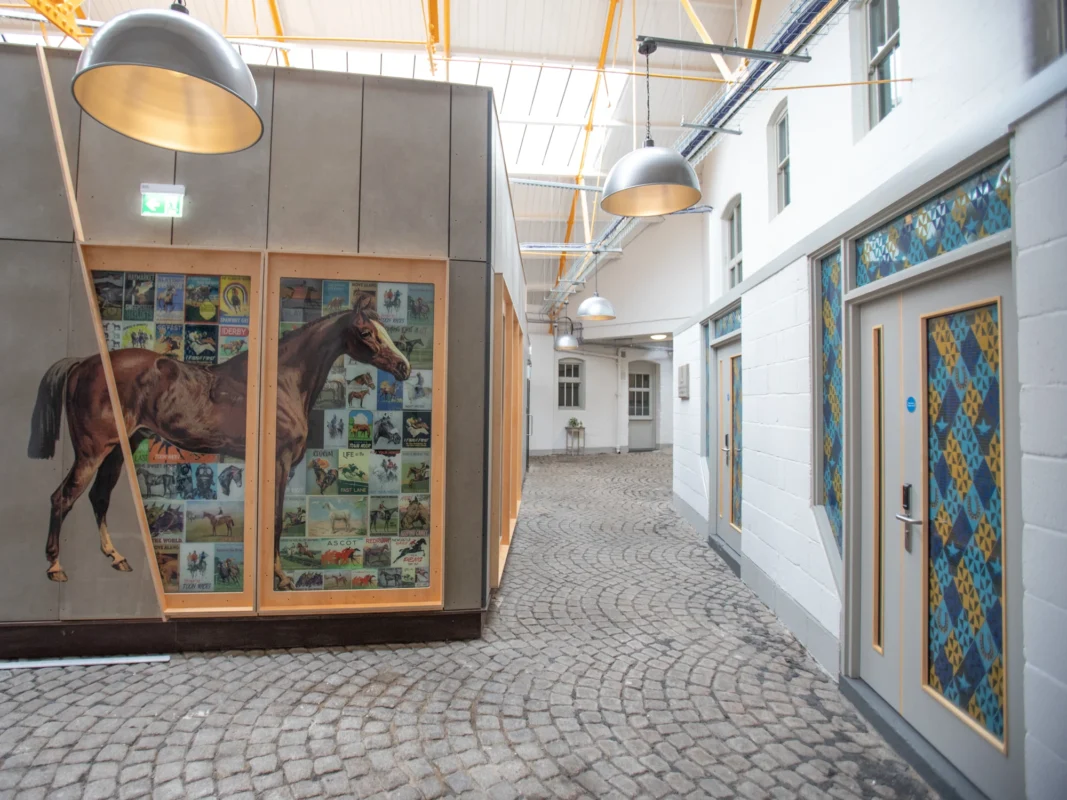
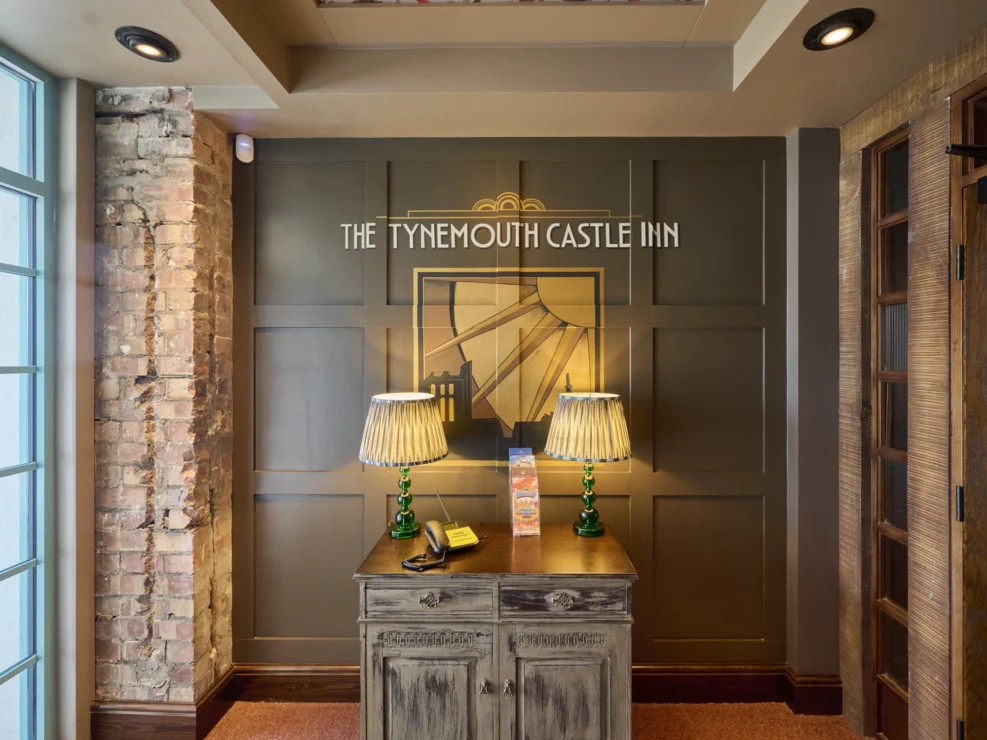
Careful selection of durable paint for offices and retail environments means that finishes remain visually appealing without escalating maintenance costs. Our previous projects like The Story in Durham and the Tynemouth Castle Inn demonstrate precisely how tailored finish selection supports both heritage and modern commercial spaces.
Industrial and warehousing
Industrial spaces demand performance-led coatings. Decorative appearance is secondary to protection, safety and longevity. Common requirements include protective metal finishes, floor coatings with slip resistance, and high-build systems for impact protection.
Performance vs. aesthetics: Finding the balance
Choosing a paint finish is often a delicate balancing act between how a space looks and how it performs. That’s where our team can act as a supportive pillar.
In commercial environments, visual impact must work in tandem with practical considerations such as maintenance cycles, cleaning methods, and long-term cost efficiency. After all, a finish that looks impressive on day one but deteriorates quickly can result in higher whole-life costs and unnecessary disruption.
Light reflectance value (LRV)
LRV measures how much light a surface reflects, expressed as a percentage. Higher sheen finishes generally reflect more light, which can help brighten large spaces, improve visibility and reduce reliance on artificial lighting.
In offices, retail units and public buildings, this can contribute to improved energy efficiency and a more comfortable environment for occupants.
However, increased reflectivity can also introduce challenges. High-sheen finishes may create glare under strong lighting and emphasise surface imperfections, particularly on large wall areas. Lower sheen finishes absorb more light, creating a softer aesthetic, but may require enhanced durability through specialist formulations.
Davison Solutions advises clients on selecting finishes that optimise light performance while maintaining visual comfort, ensuring the aesthetic supports both user experience and operational efficiency.
Site-specific advice
No two commercial buildings are the same. Ceiling height, natural light, occupancy levels, and cleaning regimes all influence the optimal finish. This is why professional commercial painting advice is invaluable at the specification stage.
Rather than offering generic recommendations, Davison Solutions assesses each environment individually to ensure the finish supports the operational demands of the space.
Work with our team
Choosing the right paint finish is not just a decorative decision. It’s a technical specification that affects how a building performs and how much it costs to maintain over its lifetime. Working with us means partnering with a team that understands this balance and approaches every project with a focus on truly long-term value.
Our painting & decorating specialists work closely with business owners and facilities managers to develop finish specifications that are genuinely fit for purpose. We take the time to understand how each space is used, the level of traffic it experiences, the cleaning regimes it must withstand and the standards it must meet.
This allows us to recommend paint finishes and specialist coatings that protect surfaces, support operational demands and maintain a professional appearance for longer.
Beyond application, our value lies in preparation and attention to detail. From selecting the correct system for plaster, timber, metal, or masonry, to advising on hygienic, scrubbable, or protective coatings, our team makes sure that every finish is applied correctly and performs as intended.
Whether you are refurbishing a single commercial unit or managing a complex, multi-site estate, Davison Solutions provides reliable, professional commercial painting advice backed by experience across healthcare, education, hospitality, retail and industrial environments.
To discuss a tailored paint finish specification for your next project, speak to our team today. Contact Davison Solutions to arrange a consultation and ensure your commercial space is finished right, first time.